Amman Nymphaeum: a guide to the Roman public fountain
Explore Amman’s Roman Nymphaeum, with context for its water supply and surviving niches, practical access advice and links to nearby archaeological stops.
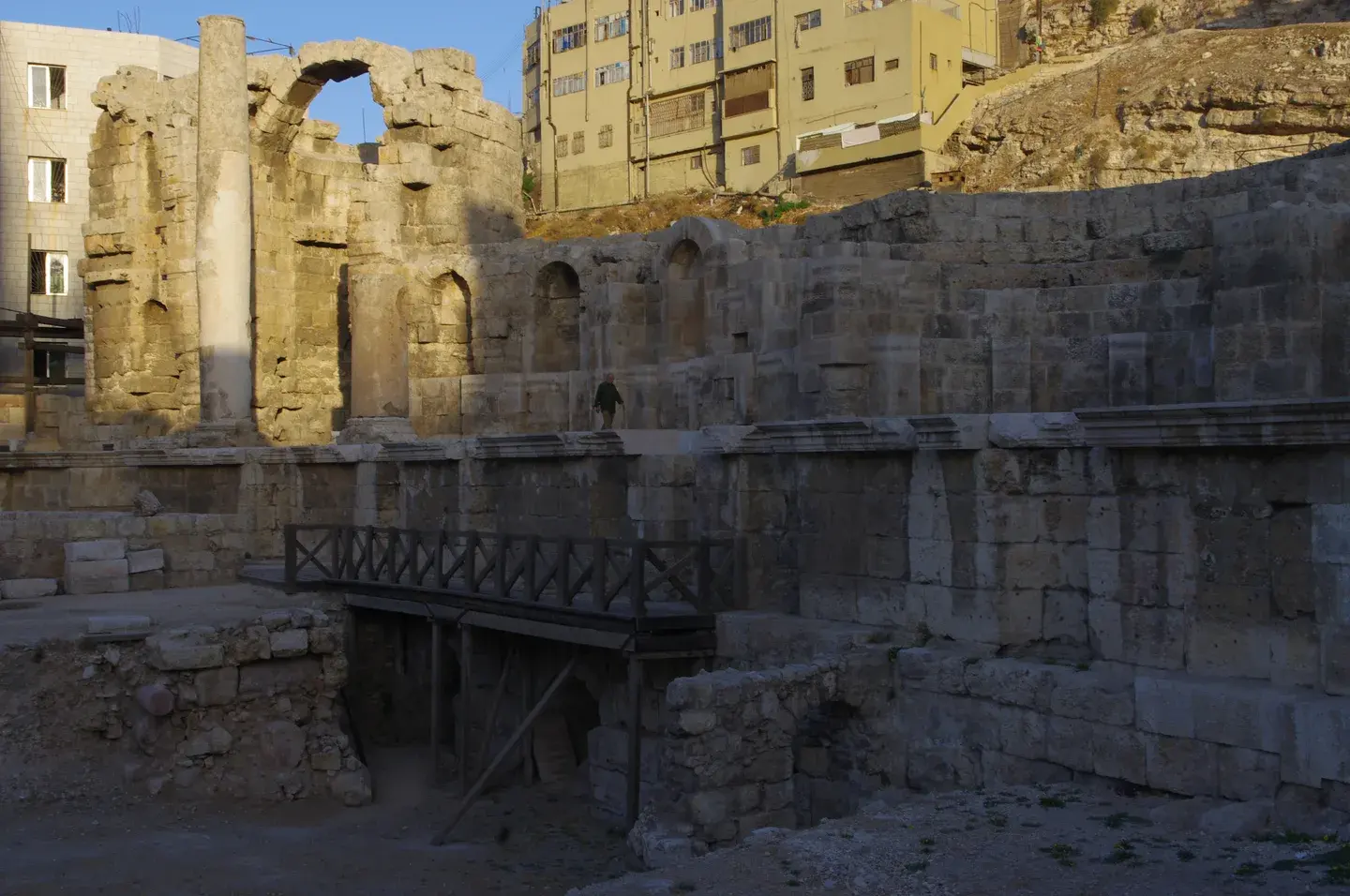
Amman's Nymphaeum adds a useful question to a day among Roman monuments: where did people meet to collect water? Its surviving stonework sits within the modern city, making it a rewarding stop for visitors interested in how ancient Philadelphia functioned beyond its theatres and hilltop buildings.
A public fountain with a larger urban role
The Department of Antiquities dates the Nymphaeum to the second century AD and describes a water channel arriving from Ras al-Ain. Its account identifies a symmetrical, semi-octagonal structure supported on vaults, with large and small niches in the facade. It also explains the building's role as a meeting place and a source of everyday water. Source: Department of Antiquities archaeological-site directory.
A UNDP guide to central Amman places the monument on Saqf Al-Sail Street and describes water descending through the building into basins. That is a useful starting point for imagining movement through the space: water arrived, became part of a public display, and served people using the city. Source: UNDP's Heart of Amman guide.
Look for the building behind the surviving wall
Begin with the outline rather than individual carved details. From a permitted viewing area, notice the changing depth of the wall and the rhythm of its recesses. Ask how the remaining structure relates to the original facade and public space in front of it.
The antiquities department describes evidence for former marble facing and suggests statues once occupied the niches. Use those interpretations to imagine a more elaborate surface, while remembering that the surviving limestone is only part of the original visual effect. A niche is not an empty window into another room; its position can be part of the facade's design.
If an interpretation panel or guide is available, compare the reconstruction with the actual remains. Look for what is visible, what has been restored and what must be inferred. Avoid climbing masonry to get a better angle, and do not assume an old visitor photograph shows the route currently open to the public.
Make access a separate planning check
Confirm current opening arrangements and the visitor entrance before making this the fixed point of your day. Being in a busy city centre does not guarantee unrestricted entry to an archaeological site. If access is limited, use permitted public viewpoints and adjust the visit rather than entering through an unofficial opening.
Wear shoes suitable for uneven surfaces and ask about steps or changes in level if anyone in your group needs an accessible route. Agree a specific pickup location with your driver; a monument name alone may not identify a convenient place to stop in surrounding traffic.
For photographs, include some of the modern surroundings as well as the ruins. The contrast helps communicate that this is a surviving piece of an inhabited city, rather than an isolated archaeological landscape.
Connect water, performance and the hilltop
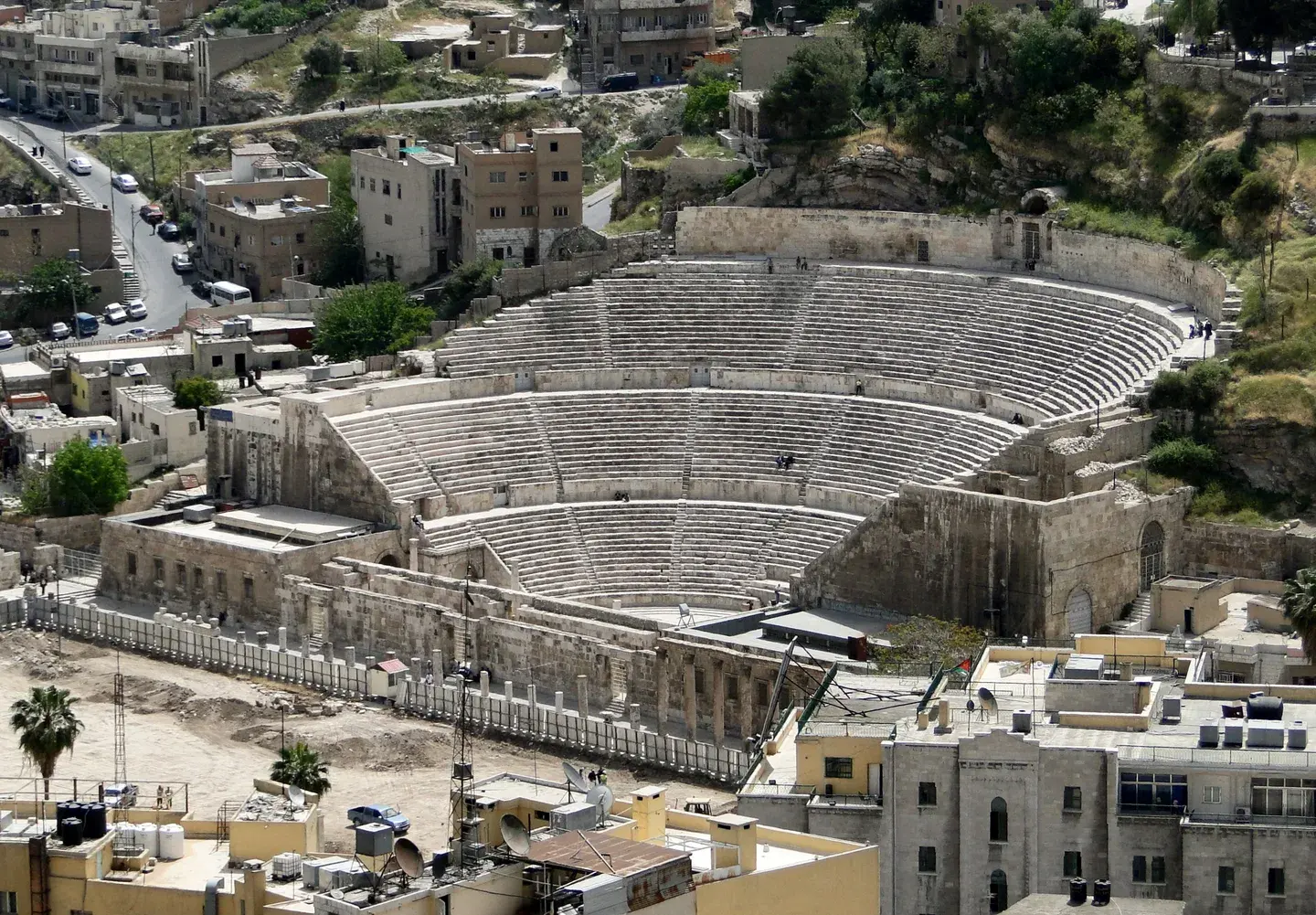
Pair the fountain with the Roman Theatre to compare two kinds of public architecture. A separate visit to the Amman Citadel adds another view of the city's historical layers.
The Jordan Archaeological Museum provides further context for the wider region. Choose the order around confirmed opening times and your group's energy, using our Jordan transport guide to plan the transfers.
Sources checked on 31 October 2026. Confirm current opening arrangements, entrance location and accessible viewing areas before visiting.