Amman Roman Theatre: a guide to the hillside monument
Visit Amman’s Roman Theatre with context for its seating bowl, practical advice for the steps and an itinerary linking nearby museums and the Citadel.
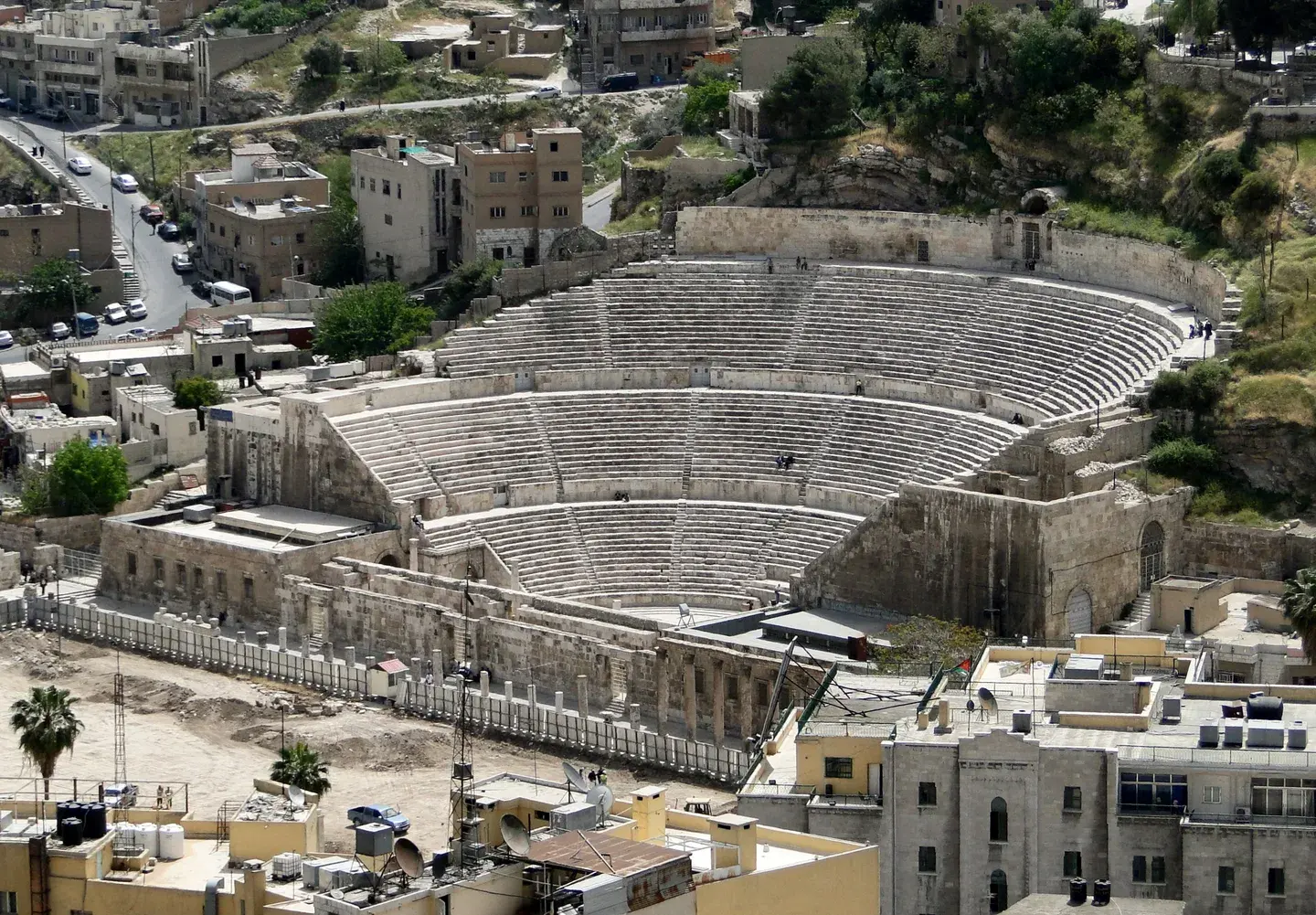
Amman's Roman Theatre is easiest to appreciate when you pause before climbing. From the lower visitor areas, the sweep of the seating and its relationship to the hillside already tell much of the story. Build the visit around the views and spaces that suit your group, rather than treating the highest row as the objective.
A monument from Roman Philadelphia
Jordan's tourism board describes the theatre as a restored second-century monument with capacity for around 6,000 spectators. Its business-events guide connects it with the reign of Antoninus Pius and the city's Roman identity as Philadelphia. The theatre remains a setting for performances, so a heritage visit and attendance at an event may involve different arrangements. Sources: Jordan Tourism Board's Amman guide and Amman heritage and events overview.
The scale is impressive, but the most useful question is practical: how does the seating bring a large audience into a shared relationship with the performance area? Looking at that arrangement makes the building more than a backdrop for a photograph.
Observe the theatre from more than one level
Begin by locating the performance area and following the curve of the seating with your eyes. Notice how the view changes as the rows rise. If you choose to climb where permitted, stop at a comfortable level and compare the angle with the view from below.
Do not assume that every visible surface is untouched Roman work. The tourism board explicitly describes the monument as restored. A guide can help explain the distinction between the ancient design and the fabric visitors see today.
Take photographs while standing still, and give other visitors room to pass on steps. A wide image can capture the bowl's geometry; a second, closer view can show the scale of a seating row. Neither requires reaching the top or stepping into a closed area.
Plan for steps and current opening arrangements
Check current admission, opening hours and any performance-related restrictions before travelling. If an event is the reason for your visit, confirm the organiser, ticket arrangements and entrance instructions separately from ordinary sightseeing information.
Stone steps can make the upper seating demanding. Wear footwear with a secure grip and allow time to descend without hurrying. Visitors with mobility needs should ask specifically about the entrance, lower viewing areas and accessible facilities before committing to a route. A satisfying visit can focus on the lower spaces if those are the appropriate option.
Bring water and consider the conditions on the day when choosing a visit time. Leave room in the schedule for a rest rather than combining every nearby attraction into one continuous climb.
Add museums or a wider city view
The Jordan Folklore Museum and Traditional Costumes and Jewelry Museum offer different subjects within the theatre complex. Check their opening and admission arrangements individually, and give their collections time of their own.
For a broader perspective on the city, plan a separate visit to the Amman Citadel. Decide how you will travel between stops before setting off; proximity on a map does not describe the effort of a hilly route. Our Jordan transport guide can help you organise that part of the day.
Official tourism information checked on 30 October 2026. Confirm current opening hours, access needs and event arrangements before visiting.