Beidha Neolithic village: looking beyond Nabataean Petra
Explore Beidha’s Neolithic village near Petra, from early house forms to practical visiting advice, with ideas for a separate stop beside Little Petra.
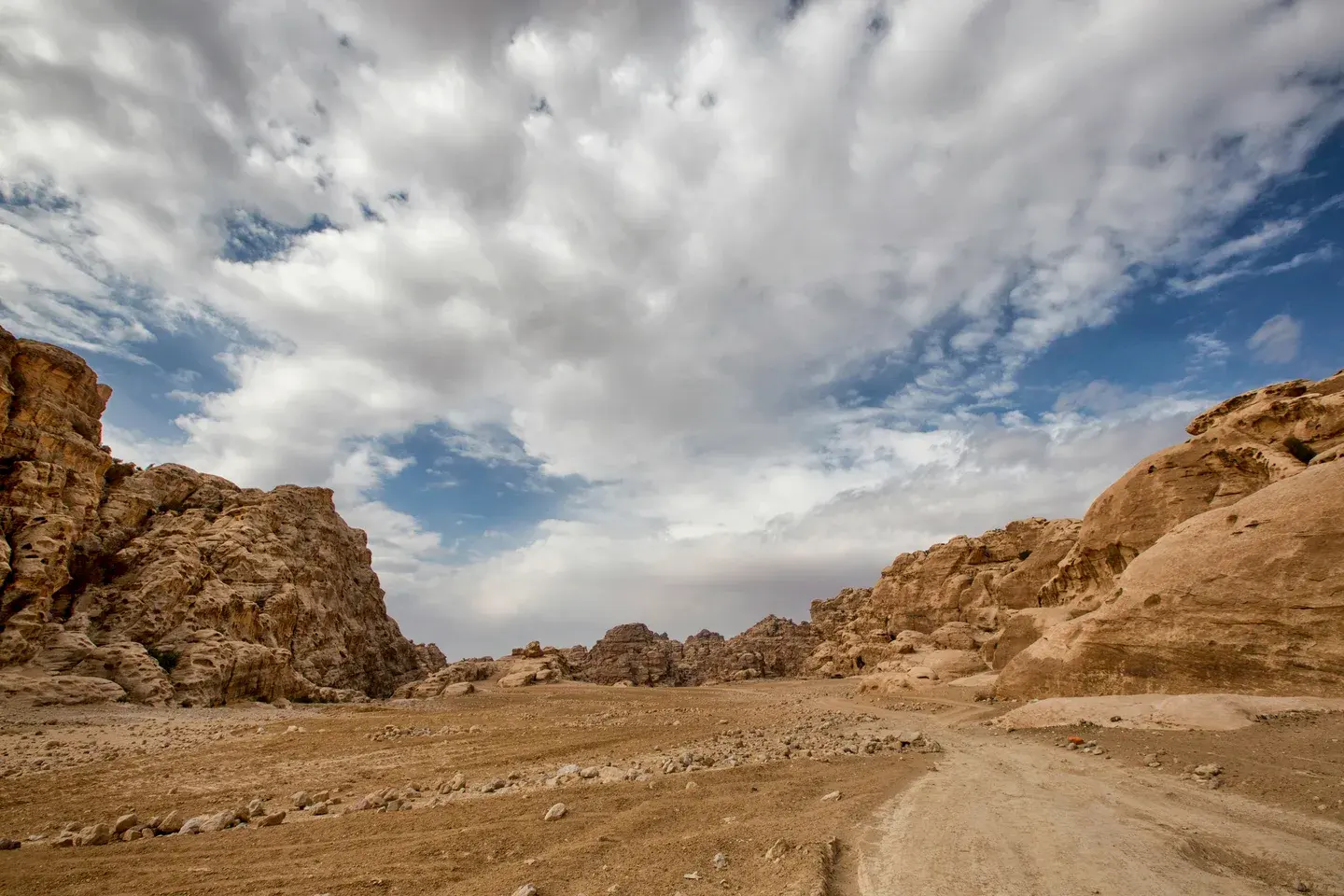
Beidha offers a different starting point for understanding the Petra region: the remains of a settlement where the shape of a home matters more than an imposing facade. Plan a visit around the low foundations, and leave time to distinguish this archaeological village from nearby Little Petra.
Why Beidha belongs on a Petra itinerary
The Petra authority identifies Beidha as a Pre-Pottery Neolithic B village. Its account describes a sequence of architectural changes, from circular single-room buildings supported by wooden posts to rectangular houses with plastered interiors. These are clues to how people organised domestic space long before Petra's celebrated Nabataean monuments. Source: Petra authority's Beidha village description.
Precise dating is more complicated than a single signboard number might suggest. Archaeological research discusses competing interpretations of Beidha's chronology. For a first visit, the useful distinction is between the Neolithic settlement and the much later carved spaces associated with Nabataean Petra. Source: Antiquity research on Neolithic settlement near Petra.
Read the foundations before taking photographs
Start with a broad view from the permitted visitor area. Look for the outlines of rooms and the relationship between adjacent structures. A low wall may be more informative when seen as part of a building than when photographed in isolation.
If a guide is available, ask which visible remains belong to which phase. The site's development should not be read as one complete village occupied in exactly the form seen today. Ask how archaeologists recognise a former wooden support or a plastered surface, and let the evidence guide the explanation.
Keep to the designated route. Avoid stepping across foundations to obtain a cleaner photograph, and leave loose stones where they lie. For photographs, include enough surrounding landscape to show the scale of the remains; a close crop can make a low domestic structure difficult to understand.
Separate a village visit from a longer hike
Confirm access, opening arrangements and the correct drop-off point with Petra's visitor services before setting out. Tell your driver that you want the Neolithic village as well as, or instead of, Siq al-Barid. Agree where you will meet again rather than assuming a waiting vehicle will be available.
Jordan's tourism board describes guided Beidha walking routes that combine several places, including the Neolithic village and Siq al-Barid. Those itineraries are a separate planning decision from a simple site stop. Confirm the route, guide, duration and transport before committing to one. Source: Jordan Tourism Board's Petra activities.
Bring water and sun protection, and choose footwear for uneven ground. Anyone needing a step-free visit should ask specifically about the approach and viewing surfaces rather than relying on the site's small scale.
Build a day around different periods
Pair the village with Little Petra and Siq al-Barid to compare built domestic spaces with later carved architecture. The Petra Museum offers another setting for exploring the region's history.
Use our Jordan transport guide to organise the return journey. Give each stop its own time slot so that the village becomes a meaningful part of the day rather than an unnamed collection of walls passed on the way elsewhere.
Sources checked on 30 October 2026. Confirm current visitor access and any guided-route arrangements before travelling.