What Is Jameed? Understanding Jordan’s Mansaf Ingredient
Understand jameed, the dried dairy ingredient used in mansaf, with tips for tasting its sauce, asking producers useful questions and shopping thoughtfully.
Jameed helps explain why mansaf has such a distinctive flavour. It is a dairy ingredient with a history of preservation and household production, and it becomes a sauce as part of the meal. Understanding that journey makes a restaurant lunch, a cooking class or a conversation with a producer more interesting.
What is jameed made from?
An ICARDA research summary hosted by FAO describes jameed as hard, dry skimmed yoghurt, mainly made from sheep’s milk in the production studied. In the traditional process, yoghurt is churned to separate butter, and the remaining skimmed yoghurt is processed and dried. Source: Improved Jameed Processing for Small Scale Sheep Dairy Farms in Jordan.
FAO’s account of traditional milk products also records sheep’s and goat’s milk as raw materials and describes the dried product as sour and salty. These descriptions establish its dairy character without implying that every producer uses the same milk or method. Source: FAO, traditional milk products.
If you are speaking to a producer, ask which milk is used and how the product is made. A name on its own gives less information than a conversation about the particular batch.
How does it relate to mansaf?
The Jordan Tourism Board identifies jameed as the ingredient that gives mansaf its characteristic taste. Its food guide also mentions jameed in other preparations, including bread-based dishes. The ingredient therefore offers a useful subject to explore beyond one restaurant order. Source: Jordan Tourism Board food guide.
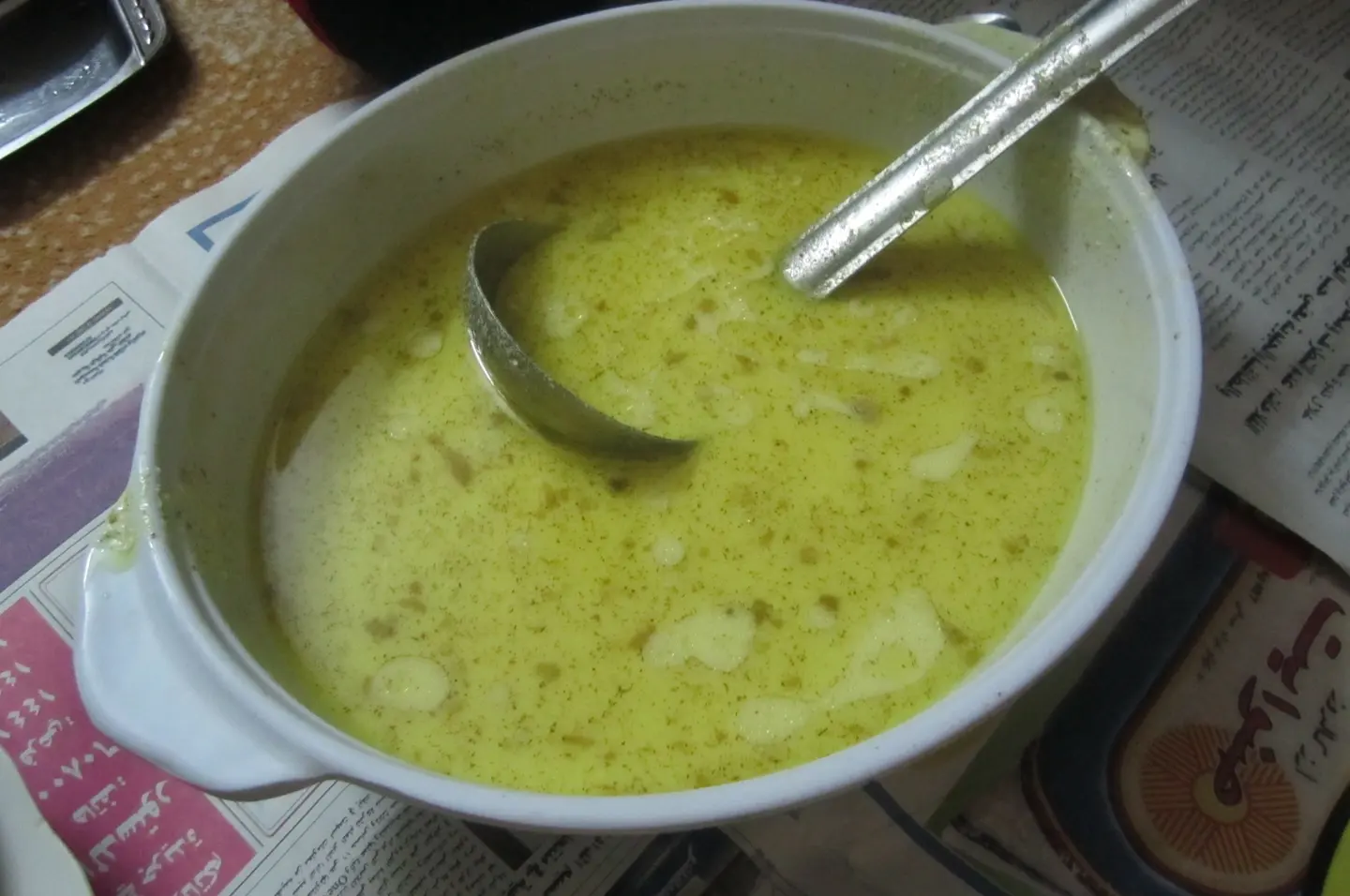
The photograph above shows prepared jameed near Jerash in 2011, with a ladle in the bowl. It illustrates the sauce stage, rather than the appearance of dry jameed before preparation. A bowl of sauce cannot tell you the exact milk, proportions or other ingredients used.
For an introduction to the complete meal, read our Jordanian food guide. When booking a mansaf meal, ask how the kitchen prepares its sauce and what is included in the serving.
Taste with a little attention
If sauce is served separately and your host agrees, begin with a small amount so you can notice its flavour before adding more. Compare a little sauce with a bite of the accompanying rice or bread. There is no need to turn the meal into a formal tasting; one thoughtful question can start a good conversation.
Ask your host how their household or kitchen prefers to serve it. Avoid treating one plate as the definitive version for the whole country. Take the opportunity to learn about individual preferences and the cook’s experience.
For anyone with a dietary requirement, make clear that you are asking about a dairy ingredient. Request information about the complete sauce and meal, including additions and accompaniments, rather than relying on the appearance or name.
What to ask when buying jameed
Approach the purchase as food shopping. Ask who produced it, where it was made, what it contains and which storage instructions apply. If a regional origin is important to you, ask for a clear explanation of that claim.
Choose packaging and labelling that give you information you can use later. Keep the producer’s directions and purchase details, especially if the product is a gift for someone who has never cooked with it.
Before buying anything to carry abroad, check your destination’s official rules for bringing in dairy products. Do this before paying, and account for any transit requirements relevant to your journey. A local sale does not establish permission to import it elsewhere.
Do not assume that a dried product has one universal storage life. Follow the instructions for what you actually buy, and ask the seller to explain anything unclear.
Learn through a kitchen visit
A cooking experience can help connect the ingredient with a finished dish. Ask whether jameed preparation is part of the session, whether you will participate and whether mansaf is on that day’s menu.
Confirm the language, duration, group size and total cost directly. Our Beit Sitti cooking-class guide outlines useful booking questions, without promising that a particular dish is always included.
Sources checked on 17 November 2026. Product methods vary; confirm ingredients, storage directions and current activities with the provider.