Musakhan in Jordan: Chicken, Sumac and What to Ask When Ordering
Discover musakhan in Jordan: Palestinian roast chicken with sumac onions and bread, plus useful questions about portions, toppings and cooking experiences.
Musakhan brings roast chicken, sumac-seasoned onions and bread together in a meal that deserves a place in a Jordan food itinerary. Its Palestinian heritage is central to understanding the dish. When you find it on a menu in Jordan, ask how that kitchen serves it before deciding how much to order.
What is musakhan?
The Jordan Tourism Board identifies musakhan as a Palestinian dish that is also popular in Jordan, describing roasted chicken with onions and sumac. It is a useful reminder that exploring food in Jordan includes dishes with connections across the region. Source: Jordan Tourism Board food guide.
You may encounter the spellings musakhan or musakhen. The Arabic name, مسخن, can help when discussing a menu or asking a host about a meal.
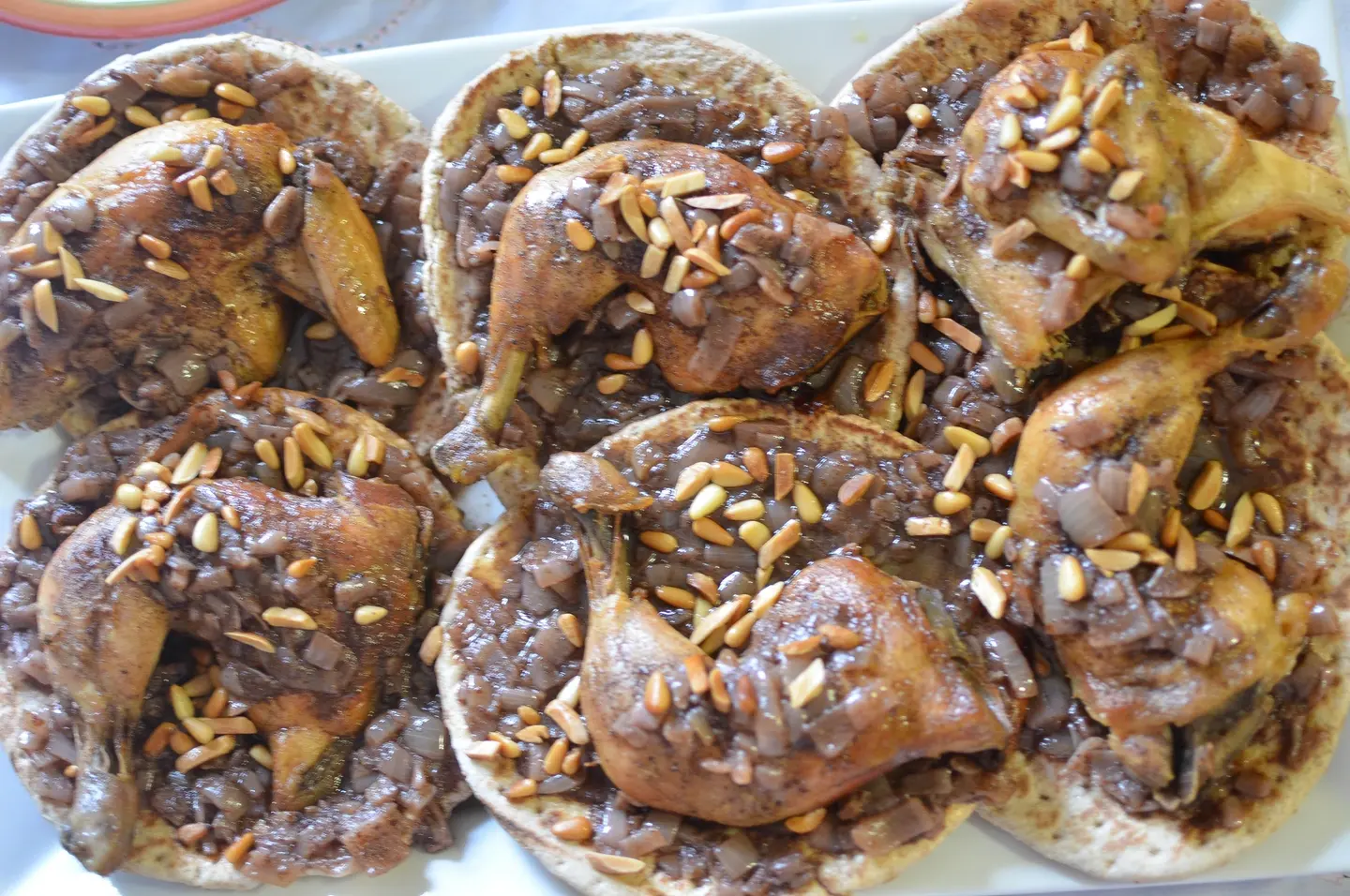
Our featured photograph shows six servings of Palestinian musakhan. It illustrates the dish’s arrangement, rather than documenting the menu, portion size or presentation of a restaurant in Jordan.
Understand the bread, onions and sumac
Cookbook author Thuraya’s preparation combines roast chicken with onions cooked in olive oil and seasoned with sumac, served on taboon bread. Her published recipe also uses pine nuts and almonds. Source: Thuraya’s musakhan recipe.
Those elements give you useful things to notice when tasting: the chicken’s seasoning, the softness of the onions and the bread beneath them. Try a bite that includes each part before deciding which flavour stands out.
Treat a published recipe as one cook’s preparation. It does not establish the ingredients or method of every kitchen, and a menu name alone does not tell you the complete recipe.
Ask about the serving format
Before ordering, ask whether the meal comes as chicken pieces over bread, how many pieces are included and how many people the serving is intended to feed. A photograph of a large tray can be a poor guide to an individual menu portion.
Confirm whether the bread is included and whether accompanying salad, yoghurt or other sides are part of the listed price. If you are ordering several dishes for a group, explain what else you intend to share so the server can suggest a sensible quantity.
If a menu offers a smaller snack or a different presentation under the same name, ask what it contains. Choose based on the actual serving description rather than assuming it will resemble a full chicken-and-bread platter.
Check toppings and ingredients
The nuts in the featured photograph are visible, but a photograph cannot establish everything used in cooking. Ask the kitchen about bread ingredients, spice mixtures, toppings and any accompaniments relevant to your needs.
If you need an ingredient omitted, ask before the meal is prepared and confirm whether that change is possible. Explain a dietary restriction clearly; removing a visible garnish does not answer questions about the rest of the preparation.
For a first encounter, ask the host how they prefer to eat their version. Thuraya describes eating musakhan by hand. Follow your own comfort and the setting, and request utensils if you prefer.
Add it to a broader food itinerary
Musakhan gives you a useful point of comparison with other meals built around a shared serving. Our maqluba guide introduces another dish to discuss with a cook, while the Jordanian food guide provides wider context.
Avoid building a day around several large meals simply to tick off names. A better plan leaves enough appetite and time to notice the bread, cooking method and family preferences behind one dish.
Book a cooking experience with a clear menu
If you want to learn the preparation, ask explicitly whether musakhan will be taught. Confirm what you will help make, whether bread preparation is included and how much of the session is demonstration.
Ask about group size, language, duration, location and the total price before booking. Discuss dietary needs during that conversation rather than on arrival. A session focused on one cook’s choices can explain more than a claim to teach a single definitive version.
Sources checked on 22 November 2026. Recipes describe individual preparations; confirm current availability, portions, ingredients and experience details with the provider.