Al Qastal, Jordan: Exploring an Umayyad Settlement near Amman
Discover Al Qastal’s palace, mosque and water-system history near Amman, with advice on interpreting the ruins, confirming access and planning transport.
Al Qastal is worth considering if you are interested in how a historic community functioned beyond its most prominent building. Read it as a settlement: places to live and worship, supported by infrastructure for water and daily life. That approach makes the visit more meaningful than searching only for a single impressive façade.
Which Al Qastal should you look for?
Jordan’s UNESCO Tentative List submission identifies the settlement at the modern village of Qastal, south of Amman, beside the airport highway. Use Al Qastal, Jordan or Qasr al-Qastal when arranging transport, and confirm the archaeological-site pin with a local guide. Source: Al Qastal submission.
The village name and a nearby highway do not establish the correct visitor entrance. Ask how to approach and park without entering private property or obstructing local roads. If adding a visit to an airport journey, leave a generous time margin and confirm access first.
Why the settlement matters
The submission describes an Umayyad complex comprising a residential palace, mosque, cemetery, bathhouse, dwellings and extensive water infrastructure. It explains that archaeological investigation changed an earlier interpretation of the site as a small Roman fort. Source: settlement description.
That offers a useful way to organise your questions. Start with the residential building, then ask how worship, domestic activity and water provision related to it. A guide can help separate visible remains from features known primarily through excavation or historical interpretation.
Al Qastal is on Jordan’s Tentative List, submitted in June 2001; it is not an inscribed World Heritage property. Source: UNESCO listing status.
What to notice in the ruins
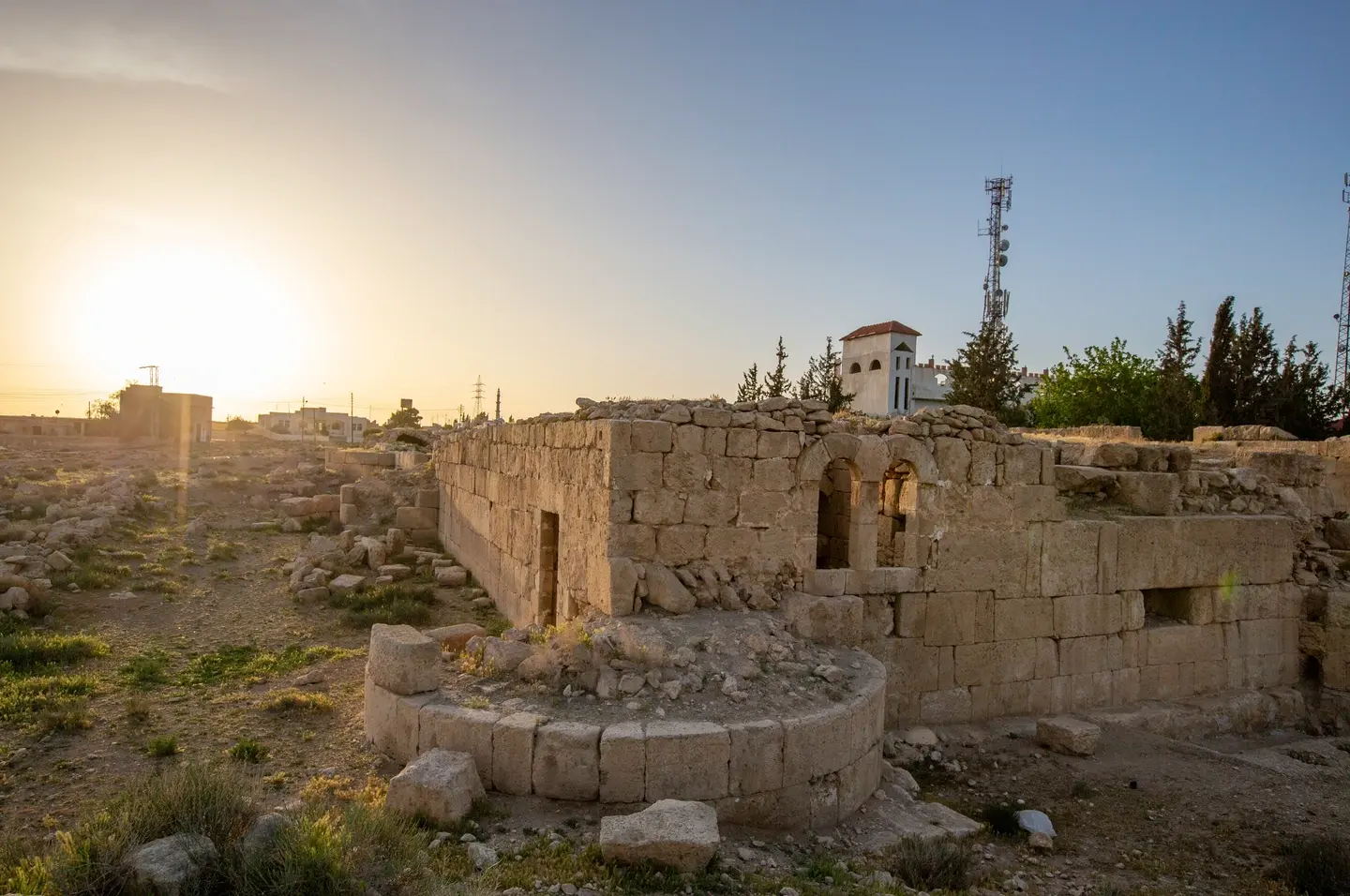
The featured photograph shows surviving stone walls, arched openings and a curved masonry feature, with modern buildings in the background. It was taken in 2013 and should be read as an architectural view rather than a current survey of the site.
Pause at a permitted viewpoint and look at how openings and walls define separate spaces. Where a corner or doorway is incomplete, resist filling in the missing structure from imagination. Ask which building phase a guide is discussing before interpreting every wall as part of the same plan.
The submission also describes reservoirs, cisterns and a dam serving the wider settlement. That history helps explain why a visit need not revolve around decorative stonework alone. It does not mean all those features are accessible on one visitor route. Source: water infrastructure.
Arrange access and a realistic route
A current comprehensive visitor timetable, ticket price and accessibility description were not established in the reviewed material. Before leaving Amman, ask a local guide or the relevant antiquities office which areas may be visited and whether a caretaker should be contacted.
Request an arrival point and a route suited to your group. Tell the organiser if you need step-free access or short walking distances. Ask about ground conditions rather than relying on a general description of the site as small.
Bring water, sun protection and suitable footwear. Observe walls and scattered stones from permitted paths; avoid climbing or moving material to inspect it. Respect nearby homes and ask before photographing people.
Put Al Qastal in context
The Qasr al-Mshatta guide provides another architectural subject for a trip south of Amman. Treat it as a separately planned stop, with its own access and transport checks.
If you want a more substantial base for understanding the region’s collections, read our Madaba Archaeological Museum guide. Choose a visit that matches your interests and confirmed schedule rather than assuming every historical connection creates a convenient same-day route.
Sources checked on 12 November 2026. The Tentative List submission is a historical description; it does not confirm today’s entry arrangements, facilities or the accessibility of individual remains.