Humayma, Jordan: A Guide to the Desert Archaeological Site
Explore Humayma’s Nabataean water systems, Roman fort and Abbasid history, with advice on interpretation, access and planning a southern Jordan stop.
Humayma offers a different way to explore southern Jordan: through the remains of a settlement that depended on water engineering, trade and connections beyond the desert. A visit works best with an archaeological plan and informed interpretation. Low walls can tell a rich story, but they rarely explain themselves.
Where is Humayma?
Humayma lies in southern Jordan’s Hisma desert region, between Petra and Aqaba. You may also encounter the spellings Humeima or al-Humayma, and the ancient name Hawara. The excavation project at Queen’s University describes a site containing Nabataean and Roman settlement remains, a Roman fort, Byzantine churches and early Islamic buildings. Source: Humayma Excavation Project.
When arranging transport, share the archaeological-site location rather than only the settlement’s name. Ask your driver to confirm the approach, parking point and return arrangements before adding it to a travel day. A map marker alone does not establish that a particular track is suitable for your vehicle.
Begin with the water story
The excavation team’s report on the 2000 season explains that the Nabataeans supplied the town through a 27-kilometre aqueduct. Later reservoirs and terracotta pipes distributed water to particular areas. This infrastructure helps explain how a substantial settlement could function in the desert. Source: University of Victoria excavation report.
Use water as a theme for your visit. Ask a guide to identify a permitted viewpoint onto a documented water installation and explain how it relates to nearby buildings. Look for changes in level and the settlement’s relationship to its surroundings, rather than expecting an intact aqueduct to accompany the whole walking route.
The published research describes archaeological evidence; it does not promise that every excavated feature is exposed or accessible today. Never enter a cistern or follow a channel away from the agreed route to seek a better photograph.
Understand the Roman fort in context
Following Rome’s annexation of the Nabataean kingdom, a large fort was built beside the town in the early second century AD. Excavations also investigated buildings outside its gates, including a shrine with evidence of both local and imported religious traditions. Source: the excavation team’s 2000 report.
That relationship between soldiers and neighbours is a useful interpretive question. Ask where the fort ended and the surrounding settlement began, and what distinguishes their buildings. A fort plan can reveal entrances, circulation and organised space even where the standing masonry is modest.
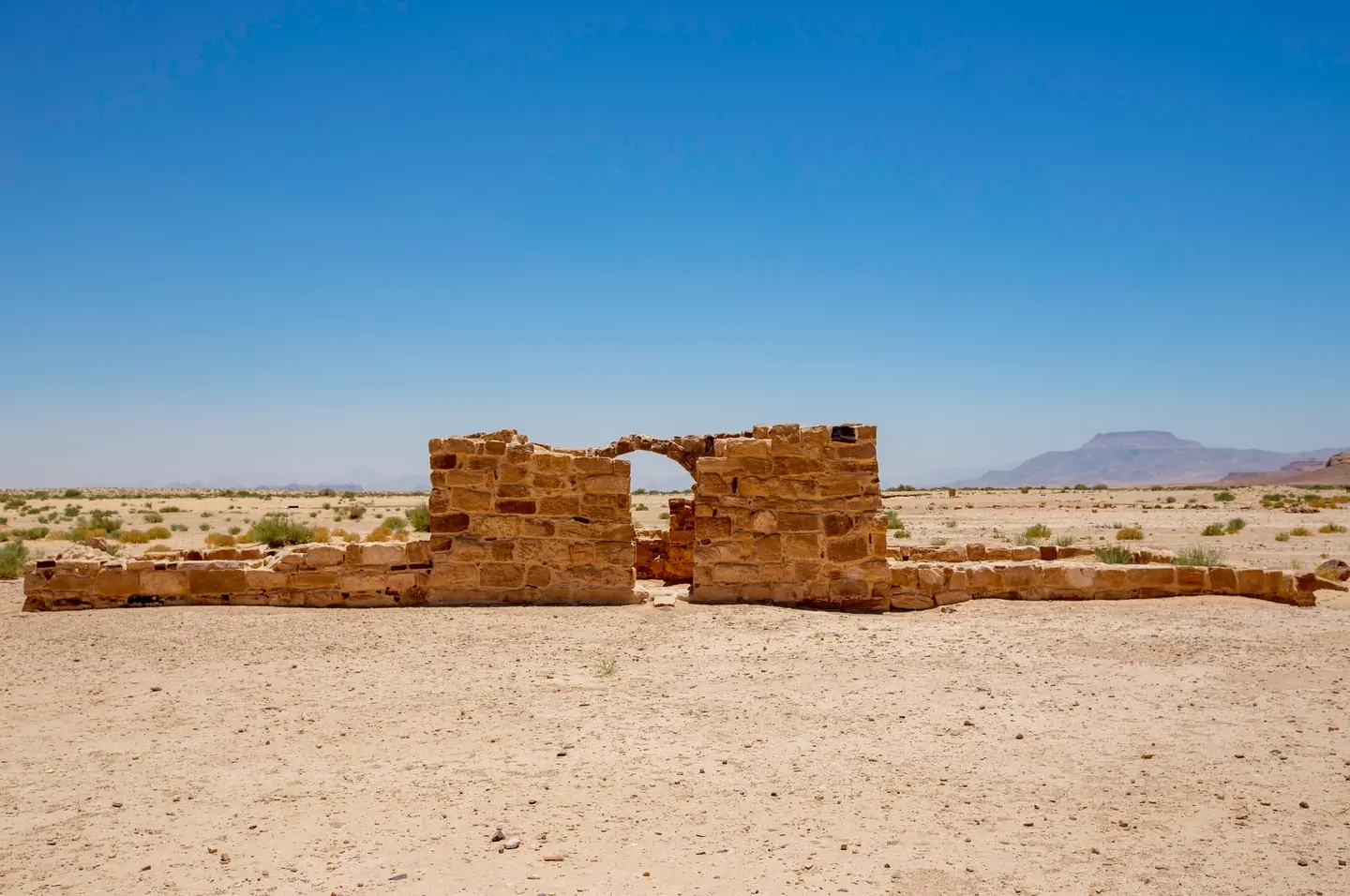
The featured photograph shows an arch and low walls at Humayma in 2013. It is a view of the site, rather than evidence that this particular arch belongs to the Roman fort. Let the archaeological plan and a knowledgeable explanation establish the identity of individual remains.
Follow the later history
Humayma’s story continues through Byzantine churches and the estate associated with the Abbasid family. The Queen’s University project overview identifies the family’s qasr and mosque among the site’s notable remains and discusses Humayma’s role before the Abbasid overthrow of the Umayyad caliphate. Source: project overview.
For a manageable visit, choose two or three themes rather than trying to identify every wall. Water, the fort and the later estate provide a coherent framework. Ask which examples are currently visible and how their dates are established.
Confirm access before setting out
Reliable current admission charges, opening hours, visitor facilities and a complete accessible route were not established from the reviewed sources. Confirm these directly with a local guide or the relevant antiquities office before travelling specifically for Humayma.
Discuss the walking surface, shade, toilets and drinking water. Carry your own water and sun protection, check the forecast and allow daylight for both the visit and the onward journey. If travelling between hotels, keep enough margin for the agreed check-in or transfer.
Stay on permitted routes, keep off ancient walls and leave stones and pottery fragments where they are. Respect any conservation closures and nearby residents.
For wider context, explore our Petra guide beyond the Treasury and compare transport arrangements in getting around Jordan.
Sources checked on 16 November 2026. Historical project reports support the archaeological background; confirm current visitor arrangements directly.