Qatraneh Castle: A Heritage Stop off Jordan’s Desert Highway
Discover Qatraneh Castle’s pilgrimage-route history, what to notice in its stonework, and how to plan a careful stop beside Jordan’s Desert Highway.
Qatraneh Castle rewards travellers who are curious about the infrastructure behind historic journeys. Its compact stone enclosure offers a different subject from Jordan’s larger hilltop castles: a place associated with travellers, protection and water along a pilgrimage route. Consider it as a deliberate heritage stop when your route passes the area, with access checked before departure.
Where is Qatraneh Castle?
The Cultural Resources Impact Assessment hosted by the U.S. International Development Finance Corporation identifies Al-Qatraneh Castle in the Qatraneh–Karak area beside the highway towards Aqaba. Its site description places the fort west of the highway. Ask your driver for the local approach and a permitted parking place; proximity to a main road does not establish a safe place to stop. Source: archaeological assessment, site 35, page 37.
Use the names Qatraneh, Qatrana and Al-Qatraneh when comparing map results. Confirm that the pin shows this compact fort before setting off. It belongs in a discussion of your north–south road journey; adding it to an eastern desert-castles excursion requires a separate route decision.
A station on the pilgrimage route
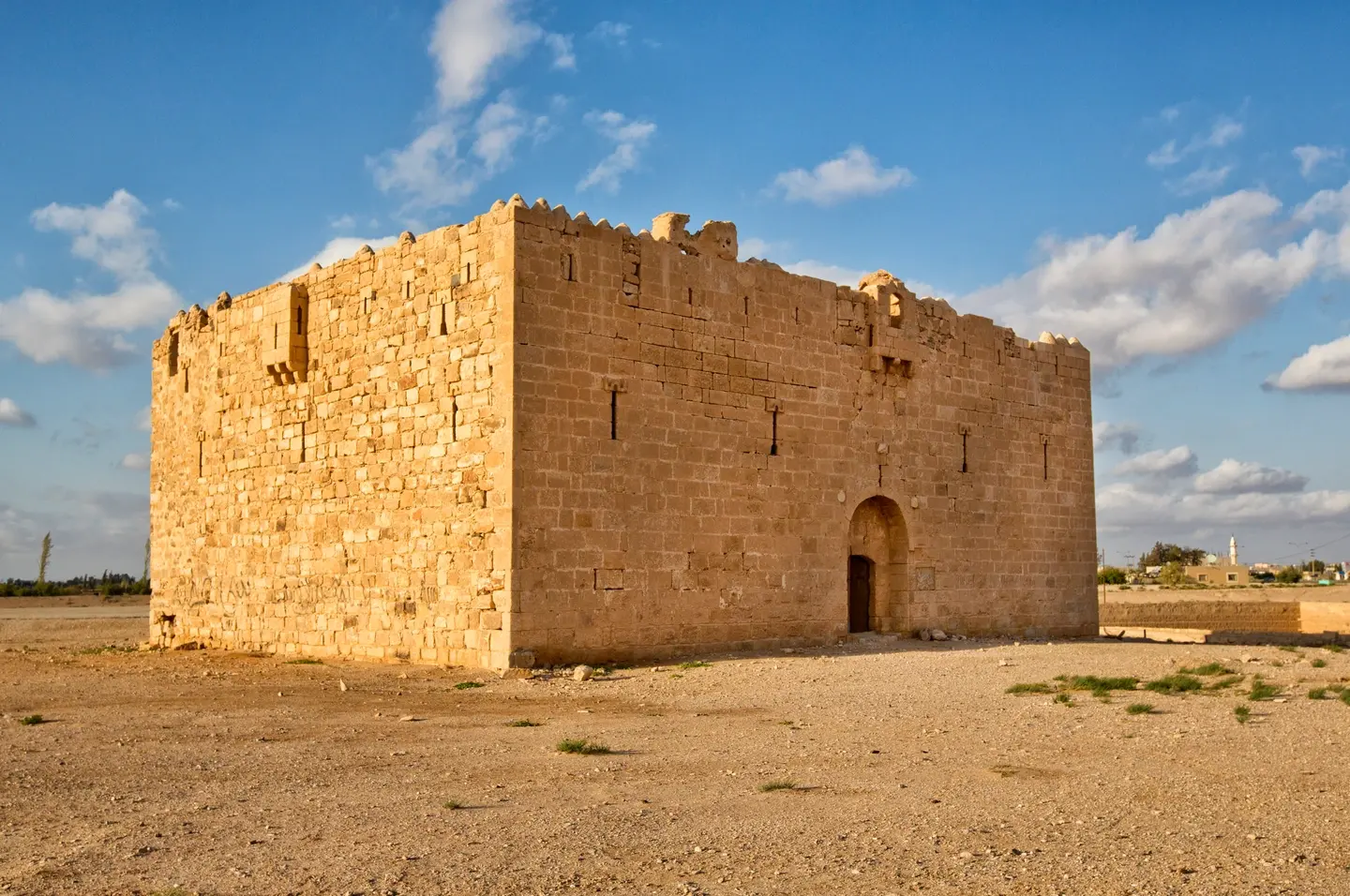
The assessment describes a two-storey square fort, a south-facing entrance and a large pool to its east. It connects the site with the pilgrimage route from Damascus towards Arabia and notes restoration involving Jordan’s Department of Antiquities and Turkey’s Ministry of Culture.
The same report records differing interpretations of the earliest building phases, including proposed earlier origins and later Ottoman development. An exact foundation year would imply more certainty than that account supports. Source: site 35 in the archaeological assessment.
That history offers a useful question for the visit: what would a journey need beyond a road? Look at the relationship between enclosure, entrance and water storage, where permitted access allows you to do so.
What to notice at the fort
Begin with the exterior. The featured photograph shows broad stone walls, narrow openings and a recessed arched entrance. Compare those elements from the visitor area rather than climbing the masonry to obtain a higher view. The image was taken in 2013; it provides architectural context, not evidence of today’s access arrangements.
If the interior is open, ask a caretaker or guide to identify original fabric and restored sections. Observe the contrast between an enclosed space and the surrounding open ground. Avoid assigning a function to every niche or opening without supporting interpretation.
Plan the stop before leaving the highway
A dependable current opening timetable, admission price and full accessibility description were not established in the sources reviewed. Confirm entry arrangements through a local guide or the relevant antiquities office before making the stop essential to your day.
Ask about the approach from parking, any steps, interior restrictions and visitor facilities. Carry water, a hat and footwear suitable for uneven ground. Arrange meals and toilets separately unless their availability has been confirmed.
For your itinerary, allow a flexible pause rather than promising a precise visit length. Continue with an exterior view only where this is permitted, and leave space in the plan if the building is closed.
Combine Qatraneh with a broader journey
Travellers interested in contrasting fortifications can read our Karak Castle guide, then compare the journeys involved before combining them. Our getting around Jordan guide explains the wider transport choices.
Qatraneh makes most sense when its modest scale and route history are the reason for stopping. Give the building a few careful observations, then continue without turning a heritage visit into a rushed roadside manoeuvre.
Sources checked on 11 November 2026. The archaeological assessment supplies historical context; present-day entry, parking, fees and facilities require local confirmation.