Tell Dhiban, Jordan: Archaeology and a King’s Highway Stop
Discover Tell Dhiban’s long settlement history and connection to the Mesha Stele, with practical advice for a thoughtful King’s Highway archaeological stop.
Tell Dhiban is a rewarding stop for travellers interested in how an archaeological mound and a living town occupy the same landscape. Its value lies in a long, interrupted history of settlement, rather than a single monument. Plan to read the site with a guide or archaeological overview, and keep expectations about access separate from what research has uncovered.
Why visit Tell Dhiban?
The Dhiban Excavation and Development Project describes the site as a mound beside the modern town in west-central Jordan. Its published research covers settlement from the Early Bronze Age through later Islamic periods and asks why communities repeatedly returned to this place. Source: the project’s Open Context overview.
The location on the King’s Highway makes Dhiban a possible addition to a road journey, provided you arrange the stop in advance. Share the precise archaeological entrance or meeting point with your driver. Visiting the town and visiting the excavations are different activities, even when they are close together.
Dhiban suits visitors who enjoy looking at foundations, comparing building phases and discussing everyday life. If you mainly want a large standing monument that can be understood without interpretation, consider whether another stop better fits your group.
The Mesha Stele connection
Dhiban is associated with the Mesha Stele, an inscribed monument of the Moabite king Mesha. The Louvre’s collection record identifies Diban as its discovery place and records the object in the museum’s collection. Do not arrive expecting to see the original stele standing at the Jordanian site. Source: Louvre collection record.
This connection provides an introduction to the area’s ancient significance, but a useful visit should look beyond one famous object. Ask how written evidence relates to excavated buildings and what remains uncertain. The date of an inscription does not automatically date every wall nearby.
Look for several chapters of settlement
A project description published for the 2025 field season discusses a Nabataean temple incorporated into a later Byzantine religious complex. It also describes planned investigation of a house whose collapse was radiocarbon-dated to approximately AD 570–610. These are research descriptions from a dated fieldwork listing, rather than confirmation of current visitor displays or ongoing excavation. Source: Dhiban project listing.
Use these examples to frame questions for a guide. How can archaeologists tell that a building changed function? What survives of domestic life? Which features are securely identified, and which interpretations are provisional?
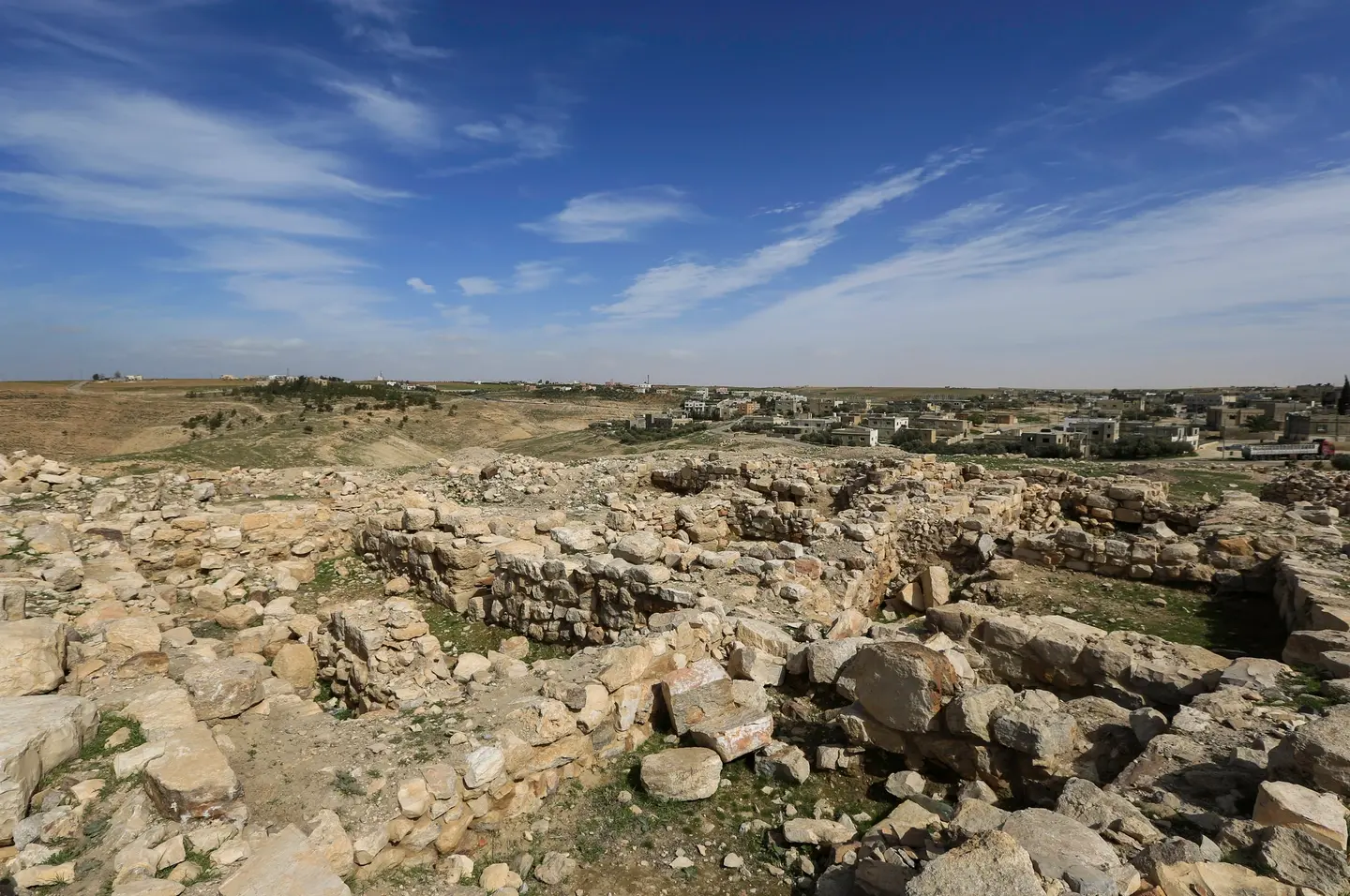
The featured photograph records exposed walls and the modern town in February 2013. It illustrates their physical relationship without showing today’s conservation condition or identifying the age of every visible structure.
Read the surrounding landscape
The project’s overview discusses water storage, agriculture and the difficulty of maintaining a large settlement in a place without natural springs. This makes the land around the mound part of the story. Source: project research overview.
From an approved viewpoint, consider how the town relates to open land and potential routes. Ask about water management and food production alongside political history. A thoughtful explanation of an ordinary room or storage feature can be as interesting as identifying an elite building.
Arrange a realistic stop
Current comprehensive hours, admission prices and accessibility arrangements were not independently confirmed in the reviewed material. Contact a local guide or the relevant antiquities office before making a special journey. Ask which areas are open, where to meet and whether any conservation work affects the route.
Agree a visit length based on the areas actually accessible and your group’s interests. Include parking, walking and discussion time in your road itinerary. Avoid attaching an unconfirmed archaeological visit to a tight airport transfer.
Wear footwear suited to uneven ground and carry water and sun protection. Ask specifically about steps, slopes, shade and toilets if these affect your plans. Keep off walls and excavation edges, leave finds in place and respect neighbouring homes.
For another archaeological subject in the wider region, see our Madaba mosaics walking guide. Our guide to getting around Jordan explains transport choices for journeys with several stops.
Sources checked on 16 November 2026. The 2025 fieldwork listing is used for archaeological context, not as a current programme or visitor timetable.